






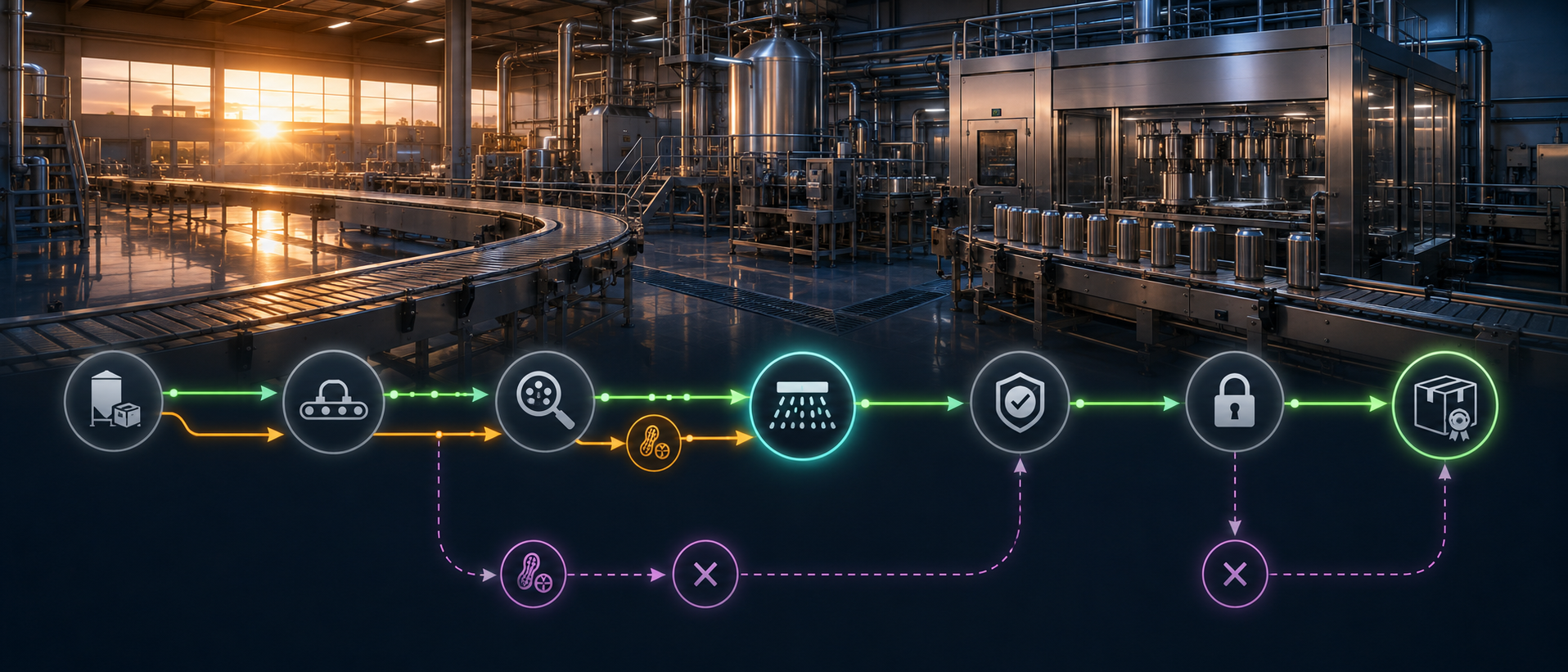


Map the workflow clearly
Turn the process into a step-by-step map people can review and the system can verify.

A deterministic control layer for high-stakes, high-compliance AI. The model proposes freely; deterministic code decides what can actually run — then locks, audits, and remembers every approved plan.
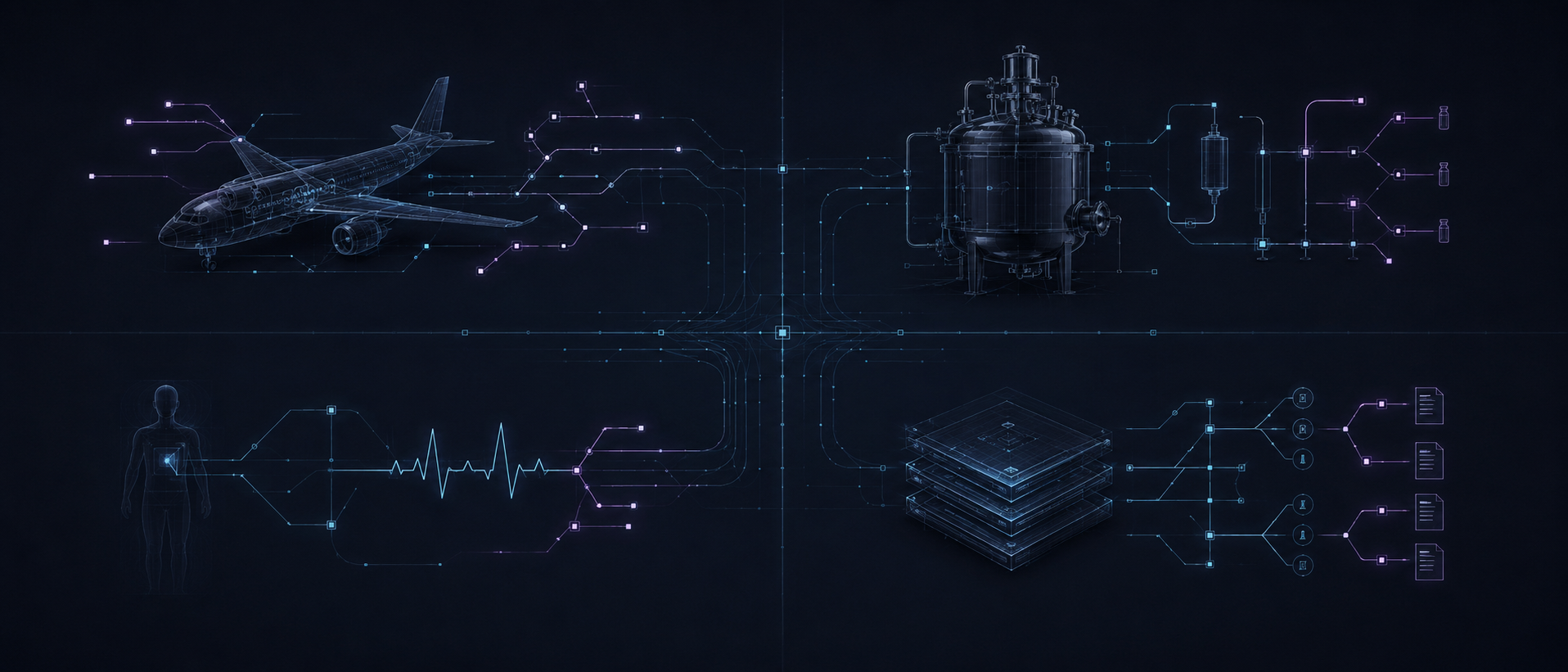
The platform
The Genesis Forge Platform is a deterministic control layer for applying AI inside high-stakes, high-compliance operations, built on the proprietary gdGraph (Generative Deterministic Graph) architecture. It lets AI generate freely while a deterministic layer decides what can actually run, then turns approved execution into evidence and operational memory.
01 · The creative layer
The deterministic layer is what makes high-stakes AI safe to ship. The creative layer is where the value lives. Give it a messy, contradictory reality and it will search millions of plans you'd never have time to consider — then hand the deterministic layer its best, fully-formed candidates.
The creative layer is an agentic system: large language models, domain heuristics, simulation, and optimization solvers working together. It thrives exactly where humans run out of hours — on ambiguity and combinatorial explosion, where the number of possible plans is astronomically larger than anyone could ever enumerate by hand.
The worked example throughout is MagicMenu — agentic AI for commercial and institutional foodservice (senior living, healthcare, managed dining). It is a data engine that plans meals, not a planning tool that spits out data. And every figure below ends the same way: the creative layer proposes, explores, simulates, and optimizes; the deterministic layer is the only thing that validates, repairs, and locks the one plan allowed to run.
Population-scale reconciliation
Every resident arrives with a stack of constraints — physician diet orders, allergens, texture modifications (regular, mechanical soft, pureed), religious and cultural preferences, dislikes. Across a large community those constraints collide and contradict by the thousands. The creative layer ingests them all and reconciles them into a small set of coherent, conflict-free dietary cohorts in seconds.
→The deterministic layer re-checks every cohort against versioned policy before anything reaches a tray card.
Variant minimization · menu-math
The naive way to satisfy every constraint is a different plate for every person — operationally impossible. The creative layer solves the set-cover problem the chef does by hand: the smallest set of base recipes plus modifiers that still covers 100% of the population safely.
→The deterministic layer verifies the minimized set still satisfies every typed constraint — coverage is verified, not assumed.
02 · The deterministic layer
Put simply: AI can suggest many options, but this layer is the final checker. It compares each option to your rules, fixes what can be fixed, blocks what is unsafe, and only then allows execution. Same inputs + same policy version → same decision, every time.
The AI can be creative. This layer is not. It runs the same checks in the same order every time, so decisions stay predictable and explainable.
You can upgrade or swap the model, and the decision boundary still holds. Change happens only when you intentionally change policy versions. The primary functions of the deterministic layer are:
Turn the process into a step-by-step map people can review and the system can verify.
If something is risky or constrained upstream, that status follows downstream so nothing gets missed.
When two requirements clash, the layer either inserts required mitigation or blocks the plan.
Confirm people, equipment, timing, and quantities are actually available before execution.
Freeze the approved plan into a hashed, versioned record that is execution-ready and audit-ready.
A DAG is a map of work. Each node is a step, and each arrow shows what can happen next.
Directed means arrows only move forward. Acyclic means the path never loops back. That one-way structure is what makes outcomes traceable and repeatable.
In MagicMenu, this DAG is the patent-pending kernel at the center of the engine. It carries risk and constraint state through every step, catches unsafe combinations, inserts mitigation when possible, and blocks anything that still fails policy.
Use the toggle below. Start with Proposed · blocked, then switch to Validated · allowed. You will see the kernel detect unsafe shared-equipment reuse, add a sanitation step, re-propagate state, and lock the final plan-of-record.
◇ Illustrative example — not a real plan
The method is narrow on purpose. Pick the workflow, map the DAG, and test the deterministic boundary before expanding.